Rubber Buffers
Moulded elastomeric impact buffers designed to progressively absorb kinetic energy, prevent metal-to-metal impact, and softly decelerate traveling cranes, elevator cars, vehicle suspensions, and pneumatic cylinder pistons.
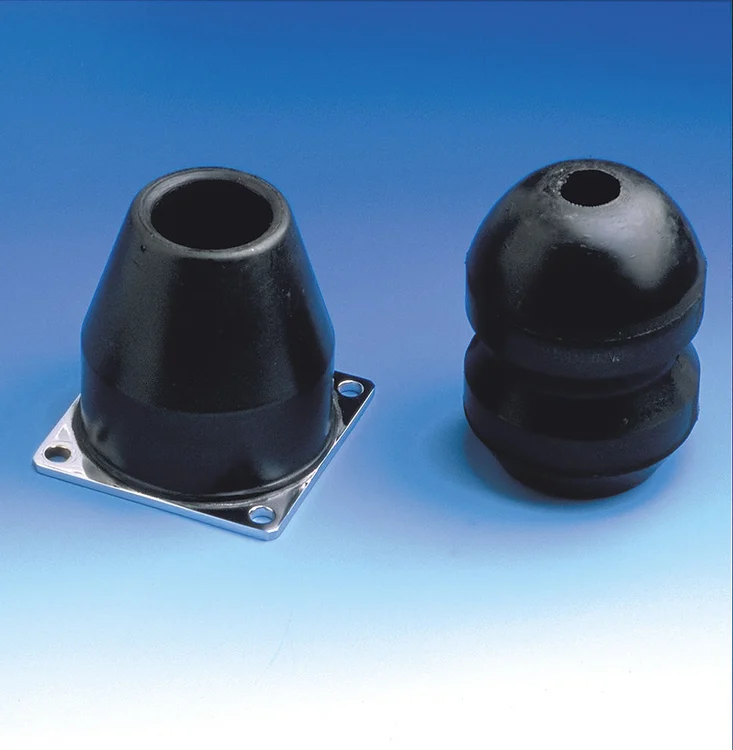
Types & Configurations of Rubber Buffers
Cylindrical Flat Face Buffers
General industrial stop buffers with threaded male stud or female tapped steel plate.
Progressive Conical Bump Stops
Conical elastomer shape reducing peak impact shock forces through progressive deformation.
Parabolic High-Stroke Buffers
Parabolic elastomeric curve providing gentle deceleration and extended stroke deflection.
Waisted Elastic Dampers
Narrowed center section delivering low initial resistance followed by rapid stiffness rise.
Recessed Bolt-Down Heavy Buffer Blocks
Heavy solid rubber blocks with counterbored holes for high-tensile anchor bolting.
Key Industrial Applications
Specifications & Technical Details
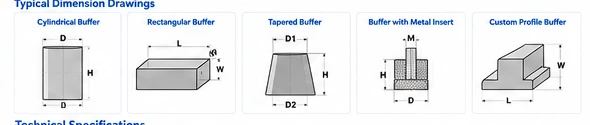
Rubber Buffers can be precision-manufactured in custom dimensions, wall thicknesses, cross-sections, and durometers to match your exact application specifications. Below are typical engineering cross-section drawings and technical parameters for reference.
Typical Dimension Drawings & Blueprint Cross-Sections
Technical Specifications
| Parameter | Specification / Options |
|---|---|
| Diameters | 10mm up to 200mm diameter |
| Heights | 8.0mm up to 180mm buffer height |
| Energy Dissipation | 10 Joules up to 8,000 Joules per impact stroke |
| Max Peak Force | Up to 250 kN dynamic impact capacity |
| Metal Studs | Grade 8.8 High-Tensile Steel, Zinc Plated (ISO 4042) / Stainless Steel 304 |
| Rubber Hardness | 45A, 55A, 65A, 75A Shore A |
| Operating Temp | -40°C to +90°C |
Material Selection & Properties
We offer specialized compound formulations tailored to chemical media, thermal extremes, static deflection, and dynamic fatigue requirements. The best material depends on your operating environment and required service life.
| Material / Polymer | Key Engineering Properties | Recommended Applications & Considerations |
|---|---|---|
| Natural Rubber (NR) | High tensile strength & dynamic resilience | General industrial mounts, automotive bushings |
| Nitrile (NBR) | Superior petroleum oil, fuel & grease resistance | Hydraulic cylinder seals, oil gaskets, fuel lines |
| EPDM | Outstanding weather, ozone, UV & steam stability | Outdoor enclosures, HVAC seals, automotive weatherstrips |
| Neoprene (CR) | Moderate oil resistance, flame retardant, ozone stable | Marine gaskets, vibration pads, railway seals |
| Silicone (VMQ) | Extreme thermal range (-60°C to +250°C), food grade | Food processing, pharmaceutical, high-heat gaskets |
| Viton® (FKM) | High chemical, acid & high temp resistance up to 220°C | Aerospace fuel seals, chemical processing pumps |
Important Engineering Guidance
The above properties are general characteristics. Final material selection depends on your specific application, operating conditions, load requirements, media compatibility, and service temperature. Please contact our polymer engineering team for tailored compounding guidance on Rubber Buffers.
Production Batch Gallery
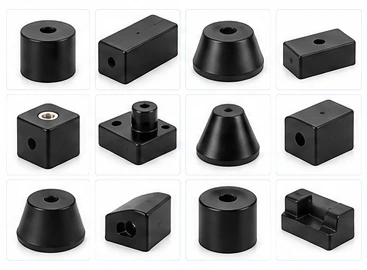
Actual production batch examples of Rubber Buffers manufactured for OEM, automotive, railway, and heavy engineering clients. We manufacture standard catalogue sizes as well as bespoke custom geometries from your CAD models or physical samples.
Request an Engineering Quote
Share your required dimensions, polymer grade, or 2D/3D drawings for immediate engineering review and quote.