Custom Bonded Components
Custom rubber-to-metal, rubber-to-plastic, and polymer-to-brass bonded components manufactured to tight tolerances. Utilizing automated Chemlok chemical bonding, phosphated metal substrates, and transfer compression molding to achieve indestructible molecular bonding where elastomer failure occurs before bond separation.
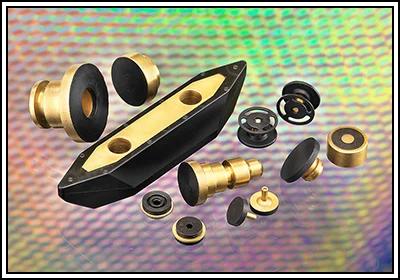
Types & Configurations of Custom Bonded Components
Rubber-to-Steel Suspension Bushings
Precision machined or drawn steel sleeves vulcanized to high-tear rubber for automotive control arms and subframes.
Metal-Encapsulated Valve Discs & Poppets
Precision turned brass or stainless steel cores overmolded with Viton, NBR or EPDM for fluid shutoff valves.
Flanged Engine & Gearbox Bracket Mounts
Cast aluminum or stamped steel brackets bonded to multi-rate rubber cushions for powertrain vibration damping.
Threaded Shock Buffer Plates
Cold-formed steel plates with chemical bonding to high-energy absorption rubber blocks for impact deceleration.
Multi-Component Insert Assemblies
Bespoke stamped hardware with complex rubber vulcanization for EV battery packs, railway bogies, and robotics.
Key Industrial Applications
Specifications & Technical Details
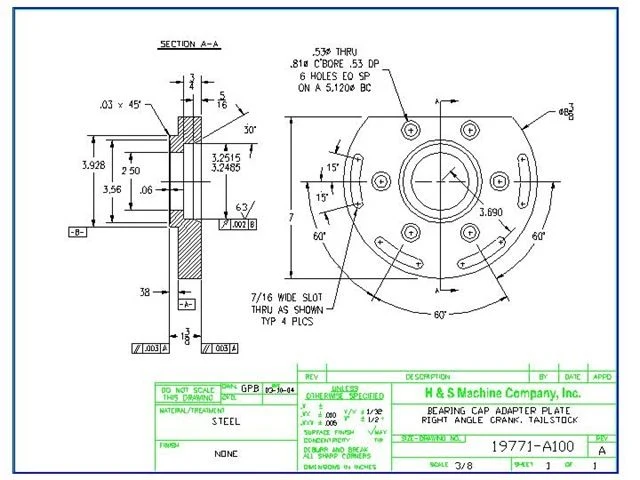
Custom Bonded Components can be precision-manufactured in custom dimensions, wall thicknesses, cross-sections, and durometers to match your exact application specifications. Below are typical engineering cross-section drawings and technical parameters for reference.
Typical Dimension Drawings & Blueprint Cross-Sections
Technical Specifications
| Parameter | Specification / Options |
|---|---|
| Metal Substrates | Mild Steel (CRCA/EN8), Stainless Steel 304/316, Brass (CW614N), Aluminum 6061-T6 |
| Surface Treatment | Solvent degreasing, zinc/manganese phosphating, shot blasting to Sa 2.5 |
| Adhesive System | Automated dual-coat silane primer and Chemlok cover coat thermal vulcanization |
| Bond Peel Strength | Rubber failure > 100% (elastomer tears before metal separation, ASTM D429 Method B) |
| Durometer Hardness | 40A to 85A Shore A (calibrated for static deflection and dynamic stiffness) |
| Elastomer Options | NR (Natural Rubber), NBR, EPDM, FKM (Viton), Silicone, HNBR, Neoprene (CR) |
| Operating Temp | -50°C to +220°C (compound dependent) |
| Tolerances | DIN ISO 3302-1 Class M2 for rubber, ISO 2768-m for metal inserts |
Material Selection & Properties
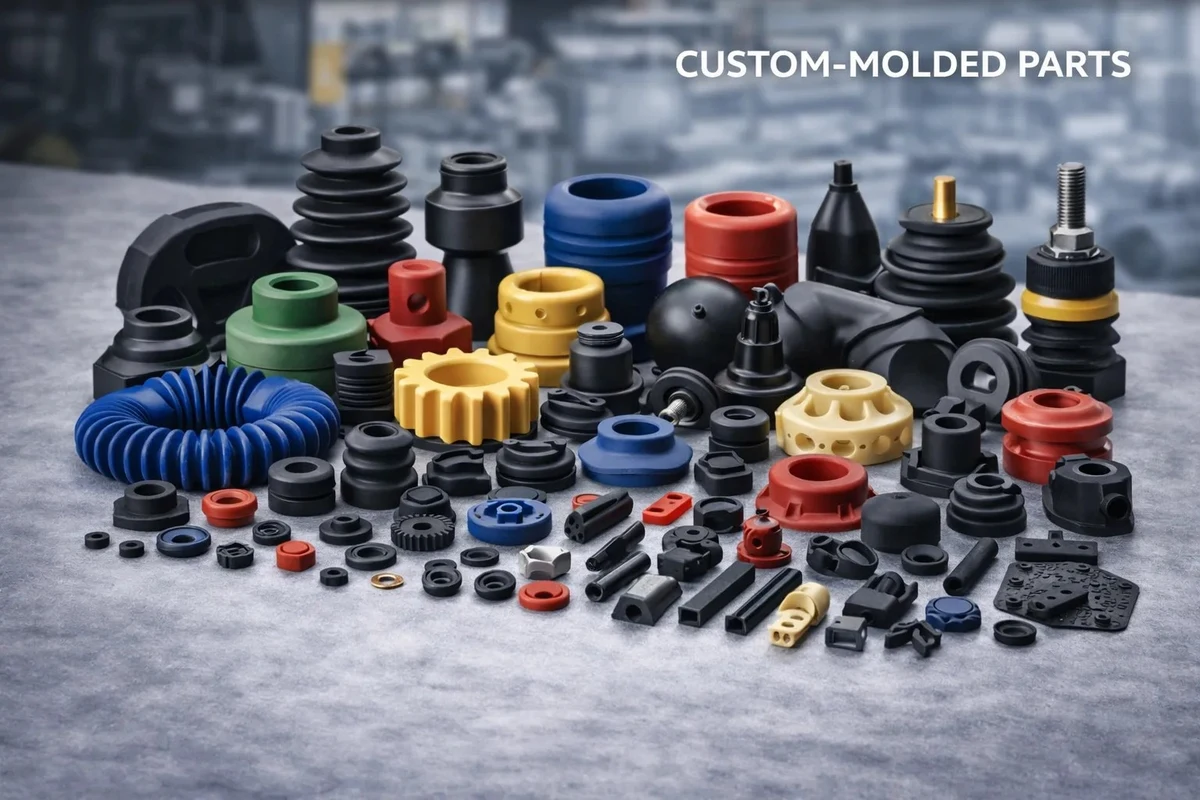
We offer specialized compound formulations tailored to chemical media, thermal extremes, static deflection, and dynamic fatigue requirements. The best material depends on your operating environment and required service life.
| Material / Polymer | Key Engineering Properties | Recommended Applications & Considerations |
|---|---|---|
| Natural Rubber + Carbon Steel | Maximum dynamic fatigue life & vibration decoupling | Suspension bushes, engine mounts, heavy cab isolators |
| Nitrile (NBR) + Mild Steel / Brass | Oil & grease immersion resistance with vulcanized bond | Rotary shaft seal inserts, fluid poppets, drive couplings |
| EPDM + Stainless Steel 304/316 | Exceptional weather, ozone, UV & polar solvent resistance | Solar mounting brackets, outdoor dampers, marine mounts |
| Viton® (FKM) + Stainless / Titanium | Resists aggressive fuels, hot oils, acids up to +220°C | Aerospace fuel valve seals, chemical pump impellers |
| Polyurethane (PU) + Steel Sleeves | Extreme load bearing & cut/tear abrasion resistance | Heavy forklift drive wheels, guide rollers, buffer plates |
Important Engineering Guidance
The above properties are general characteristics. Final material selection depends on your specific application, operating conditions, load requirements, media compatibility, and service temperature. Please contact our polymer engineering team for tailored compounding guidance on Custom Bonded Components.
Production Batch Gallery
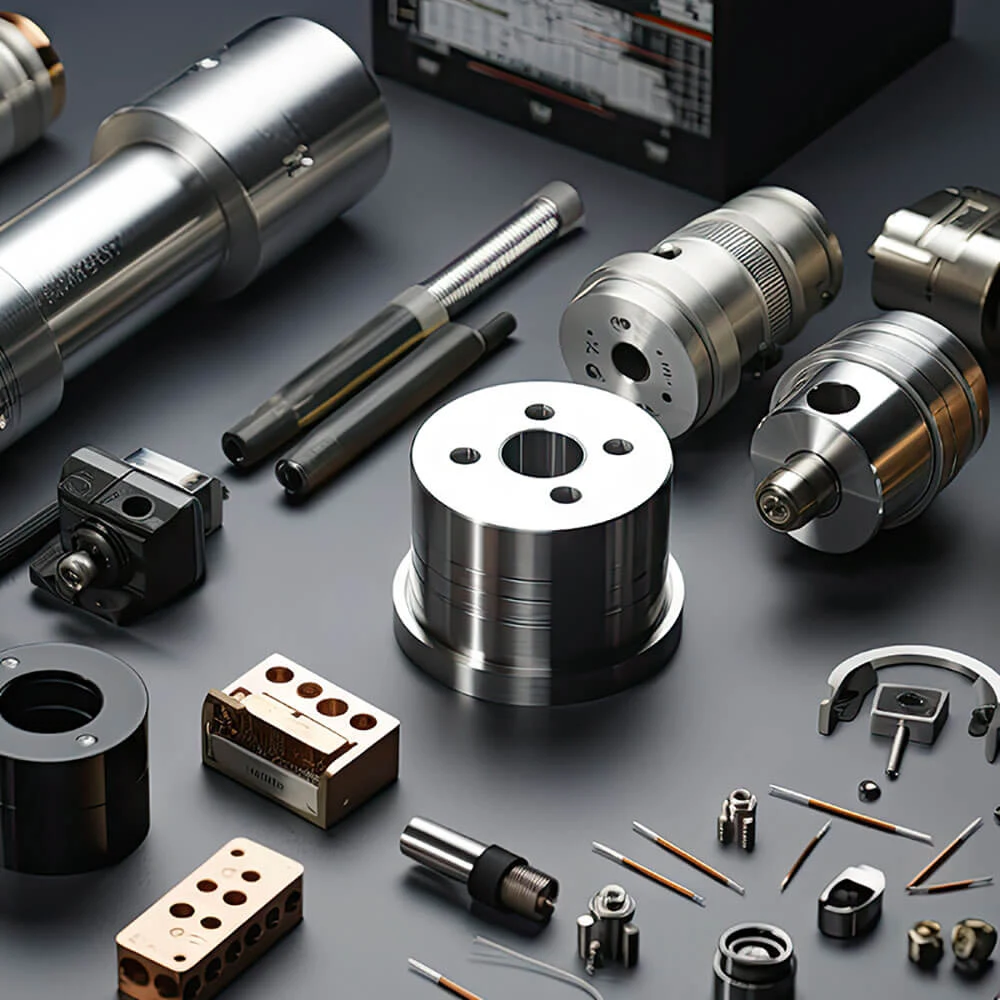
Actual production batch examples of Custom Bonded Components manufactured for OEM, automotive, railway, and heavy engineering clients. We manufacture standard catalogue sizes as well as bespoke custom geometries from your CAD models or physical samples.
Request an Engineering Quote
Share your required dimensions, polymer grade, or 2D/3D drawings for immediate engineering review and quote.